Health data and the SDGs: what gets measured, and how
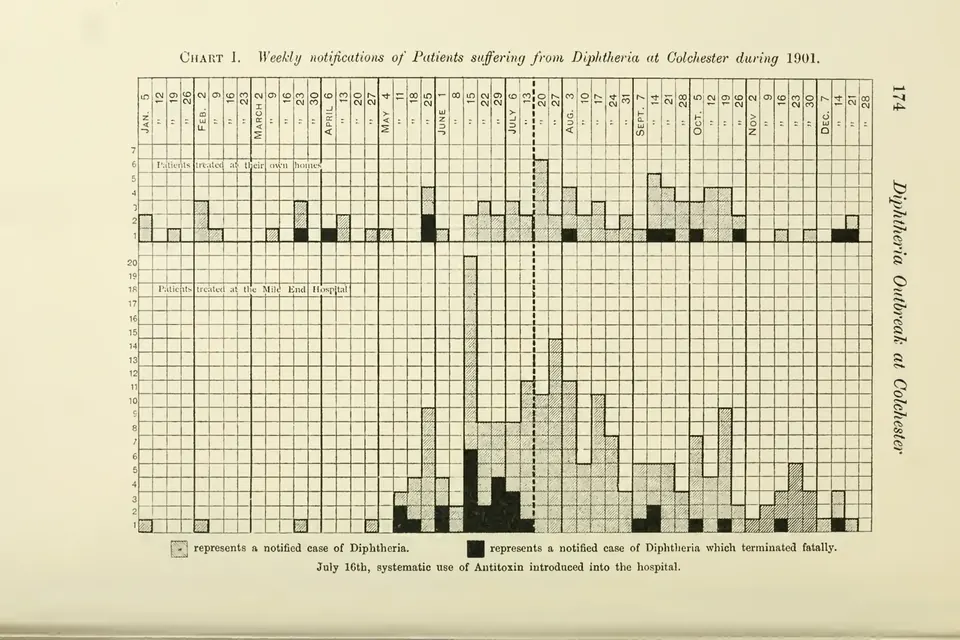
SDG 3 promises healthy lives and well-being for all at all ages, with numerical targets for maternal deaths, child deaths, epidemics and access to care. Every one of those targets assumes that countries can count births, deaths and causes of death, and can see who is reached by health services. Many still cannot do so reliably.
What SDG 3 asks to be measured
Some of the best-known targets are expressed as rates:
| Target | Goal by 2030 | What has to be counted |
|---|---|---|
| 3.1 | Reduce the global maternal mortality ratio to less than 70 per 100,000 live births | Births, and deaths of women during pregnancy or after, with cause |
| 3.2 | Neonatal mortality at least as low as 12 per 1,000 live births; under-5 mortality at least as low as 25 per 1,000 | Births and child deaths by age |
| 3.3 | End the epidemics of AIDS, tuberculosis, malaria and neglected tropical diseases | New infections and cases, through surveillance and programme data |
| 3.4 | Reduce premature mortality from noncommunicable diseases by one third | Deaths by cause and age |
| 3.8 | Achieve universal health coverage | Service coverage (3.8.1) and catastrophic health spending by households (3.8.2) |
The official list of indicators and their definitions is maintained by the UN Statistics Division. WHO is the custodian agency for most health indicators and publishes them in its annual World Health Statistics report.
Where health data come from
Civil registration and vital statistics (CRVS)
The gold standard for counting births and deaths is a complete civil registration system, with causes of death certified by doctors and coded using the WHO International Classification of Diseases (ICD-11 came into effect in January 2022). Where registration is incomplete, deaths among the poorest and most remote are the most likely to go uncounted. Birth registration is also the basis of legal identity, discussed in the explainer on SDG 16.9.
Household surveys
Programmes such as the Demographic and Health Surveys and UNICEF's Multiple Indicator Cluster Surveys (MICS) interview nationally representative samples of households every few years. They fill gaps left by registration and allow breakdowns by wealth, sex and region, but they are expensive and results arrive with a delay.
Routine health information systems
Health facilities report services delivered, cases treated and stock levels. Many low- and middle-income countries use DHIS2, open-source software developed at the University of Oslo, as their national health information platform. Routine data are timely, but quality varies and they miss people who never reach a facility.
Surveillance and laboratories
Notifiable disease reporting, sentinel sites and laboratory networks detect outbreaks. Genomic sequencing of pathogens is now part of this toolkit; see genomics in public health.
Censuses and modelled estimates
Where direct data are missing, international estimates rely on statistical models, for instance those produced by UN inter-agency groups for child and maternal mortality. Models are useful but can mask the absence of real measurement.
Why the gaps persist
- Fragmentation. Separate disease programmes, often funded by different donors, have built parallel reporting systems that do not talk to each other.
- Workforce. Data entry, analysis and use depend on trained staff, who are often scarce.
- Interoperability. Without common identifiers and standards, records cannot follow patients or be combined for analysis.
- Use. Data that are collected but never fed back to managers or communities tend to degrade in quality.
Initiatives to strengthen health data
WHO SCORE. The SCORE technical package sets out five essential interventions: Survey populations and health risks, Count births, deaths and causes of death, Optimise health service data, Review progress and performance, and Enable data use for policy and action. It comes with an assessment of country capacity.
Health Data Collaborative. Launched in 2016, it brings countries, agencies and funders together to align investments in health information systems instead of creating new parallel ones.
Digital health strategy. The World Health Assembly endorsed a Global Strategy on Digital Health 2020-2025, emphasising national digital health strategies, interoperability standards and governance.
Standards. HL7 FHIR for exchanging records, ICD-11 for diagnoses and causes of death, and terminologies such as SNOMED CT allow data from different systems to be combined.
The European Health Data Space
In Europe, Regulation (EU) 2025/327 on the European Health Data Space entered into force in March 2025. It has two parts. "Primary use" gives patients rights to access their electronic health data and to have them exchanged across borders for their care. "Secondary use" creates a framework for reusing health data for research, innovation and policy through national health data access bodies, under permits and in secure processing environments. Application is phased: most provisions apply from 2027, and the secondary-use rules for most categories of data from 2029. The interaction with data protection law is covered in the explainer on GDPR and health research.
Good practice in using health data for the SDGs
- Disaggregate. The 2030 Agenda's promise to "leave no one behind" requires data by sex, age, income, location and disability, not just national averages.
- Combine sources. Surveys, registration and routine data each have blind spots; triangulating them gives a more honest picture.
- Publish methods. Especially for modelled estimates, so users can judge uncertainty.
- Protect people. More data sharing raises re-identification and misuse risks. Governance must grow with the data.
 Health and data
GDPR and health research
Legal bases, special category data, the Article 89 research regime and international transfers, explained for research teams.
 Health and data
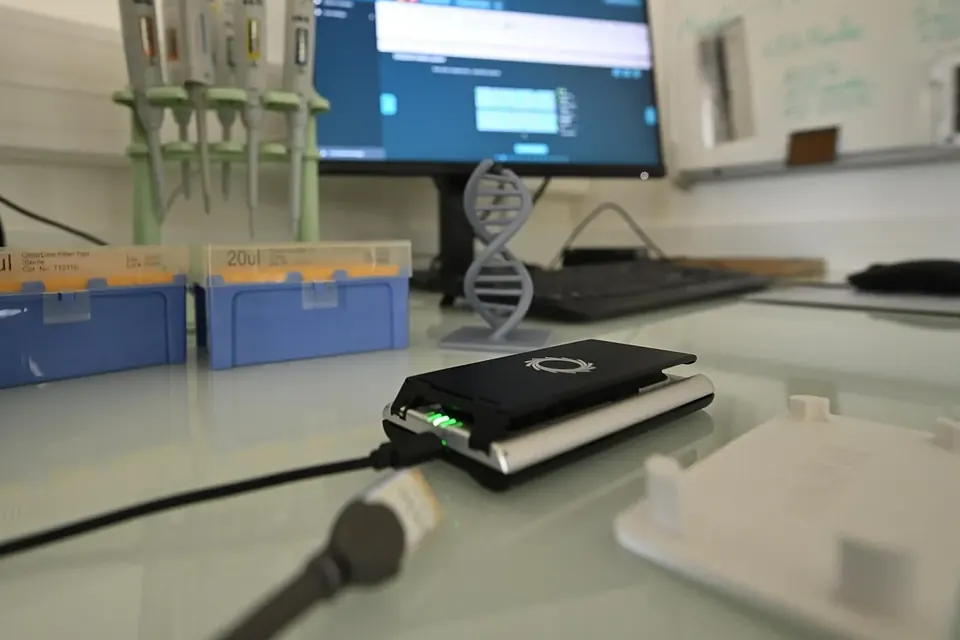
Genomics in public health
Sequencing for pathogen surveillance, rare disease diagnosis and newborn screening, and the equity questions WHO has raised.
 Health and data
Childhood cancer in Africa
Why survival is so much lower than in high-income countries, and the research priorities that could narrow the gap.