Genomics in public health: a plain guide
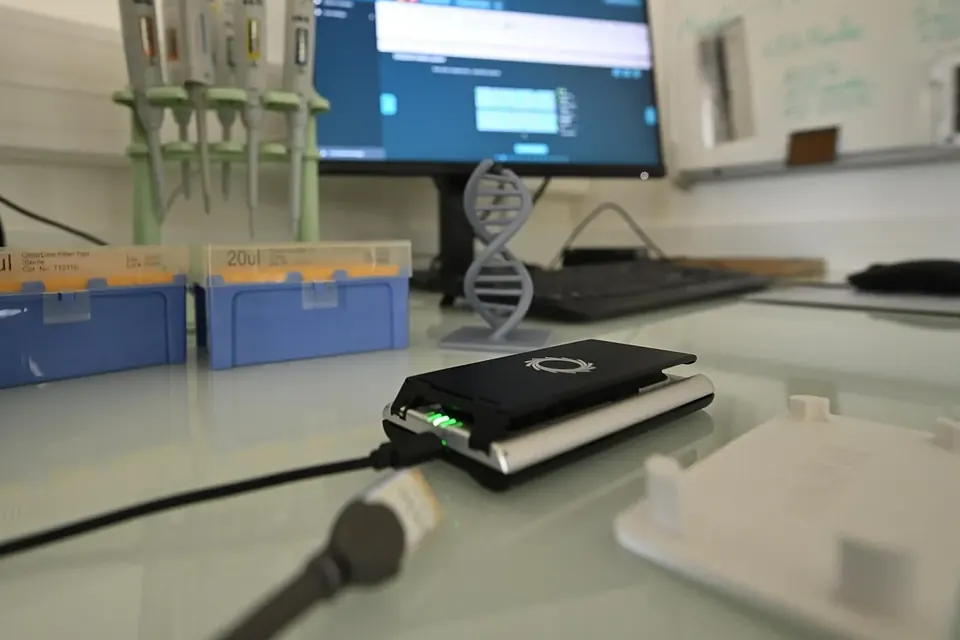
Genomics, the study of an organism's complete set of DNA, has moved from large research projects into everyday public health. It now helps track epidemics, diagnose rare diseases and guide some treatments. This guide explains the main uses, what they require, and the questions they raise, especially for countries with fewer resources.
This is an independent explainer published by Goal Seventeen. It is not an official white paper of any organisation, and it does not give medical advice.
A short vocabulary
- Genome: all the genetic material of an organism. The human genome has about three billion base pairs.
- Sequencing: reading the order of the bases (A, C, G, T). Whole-genome sequencing reads almost all of it; exome sequencing reads the protein-coding parts; targeted panels read selected genes.
- Variant: a difference from a reference sequence. Most variants are harmless; some cause or contribute to disease.
- Pathogen genomics: sequencing viruses, bacteria or parasites, rather than people.
The Human Genome Project produced a reference human sequence in 2003, after more than a decade of international work. In 2022 the Telomere-to-Telomere consortium published the first truly complete sequence of a human genome, filling the gaps left earlier. Since then, efforts such as the Human Pangenome Reference Consortium have worked to represent human genetic diversity better than a single reference can.
Use 1: pathogen surveillance
Sequencing a pathogen's genome shows which variant or strain is circulating, how cases are related, and whether resistance to drugs or escape from vaccines is emerging. During the COVID-19 pandemic, sequencing data shared through public platforms allowed new SARS-CoV-2 variants to be identified and tracked worldwide within days.
WHO's Global genomic surveillance strategy for pathogens with pandemic and epidemic potential, 2022-2032 aims to make genomic surveillance a routine part of public health systems in every country. Uses beyond pandemics include:
- foodborne outbreaks, where sequencing links cases to a common source;
- tuberculosis, where sequencing can predict drug resistance;
- antimicrobial resistance in hospitals and in the environment;
- influenza, where sequence data inform vaccine strain selection.
Africa has expanded its capacity markedly in recent years; the Africa Pathogen Genomics Initiative of Africa CDC supports laboratories and networks across the continent.
Use 2: diagnosing rare diseases
Rare diseases are individually uncommon but collectively affect many people, and a large share are genetic. Families often wait years for a diagnosis. Genome or exome sequencing can end that "diagnostic odyssey" for a substantial proportion of patients, which helps families with prognosis, treatment choices and decisions about future pregnancies. England's 100,000 Genomes Project, completed by Genomics England in 2018, was an early demonstration of genome sequencing at scale in a national health service, and led to genomic testing being integrated into routine NHS care.
Use 3: newborn screening and inherited conditions
Most newborn screening still uses biochemical tests on a dried blood spot, not sequencing. Several countries are researching whether genome sequencing at birth could detect more treatable conditions, and with what consequences for families and health systems. Inherited blood disorders are a major issue in parts of Africa, South Asia and the Mediterranean: sickle cell disease in particular is common in sub-Saharan Africa, where newborn screening followed by early care can greatly improve survival.
Use 4: cancer and pharmacogenomics
Tumour sequencing identifies mutations that can be targeted by specific therapies. Pharmacogenomics looks at inherited variants that affect how people metabolise medicines, which can guide drug choice or dose. Because the frequency of relevant variants differs between populations, findings from mostly European-ancestry studies do not always transfer.
What a genomic public health programme needs
| Component | Why it matters |
|---|---|
| Sample collection and logistics | Good results depend on getting the right samples to the lab quickly and in good condition |
| Sequencing equipment and reagents | Costs have fallen sharply, but reagent supply chains and maintenance remain barriers |
| Bioinformatics and computing | Raw sequence data need analysis pipelines, storage and trained analysts |
| Clinical interpretation | Clinical geneticists and genetic counsellors turn variants into decisions |
| Data sharing and standards | International standards, for example those developed by the Global Alliance for Genomics and Health, allow data to be combined responsibly |
| Governance | Consent, privacy, benefit-sharing and oversight |
The equity question
In 2022 WHO's Science Council published Accelerating access to genomics for global health. Its central argument is that it is neither ethically nor scientifically justifiable for less-resourced countries to gain access to genomic technologies long after wealthy ones. Its recommendations cover advocacy, implementation (planning, financing, training and lower costs of instruments and computing), collaboration, and ethical, legal and social issues. One recommendation led WHO to set up a Technical Advisory Group on Genomics.
A related problem is representation. Most human genomic data come from people of European ancestry, even though African populations carry the greatest human genetic diversity. Under-representation reduces the accuracy of genetic tests and risk scores for everyone else. Initiatives such as H3Africa, funded from 2012 by the US National Institutes of Health and the Wellcome Trust, have built genomic research capacity led by African scientists.
Ethics, law and data protection
- Consent and return of results: what participants are told, and what happens to unexpected findings.
- Privacy: genomes are inherently identifying and reveal information about relatives. In the EU, genetic data are a special category under the GDPR; see GDPR and health research.
- Discrimination: protections against the use of genetic information by insurers or employers vary by country.
- Benefit-sharing: for pathogen samples and data, the question of fair access to resulting vaccines and medicines was central to negotiations on a WHO pandemic agreement.
Links to the SDGs
Genomics contributes most directly to target 3.3 (ending epidemics and combating communicable diseases), 3.d (early warning and management of health risks), 3.4 (noncommunicable diseases) and 3.b (research and development of vaccines and medicines). Its benefits depend on capacity and cooperation, which links it to targets 9.5 and 17.6.
Related explainers: health data and the SDGs and childhood cancer in Africa.
 Health and data
Health data and the SDGs
What SDG 3 asks countries to measure, where the numbers come from, and why so many health systems still lack timely data.
 Health and data
Childhood cancer in Africa
Why survival is so much lower than in high-income countries, and the research priorities that could narrow the gap.
 Health and data
GDPR and health research
Legal bases, special category data, the Article 89 research regime and international transfers, explained for research teams.