SESAME: the synchrotron in Jordan that brings rival governments into one laboratory
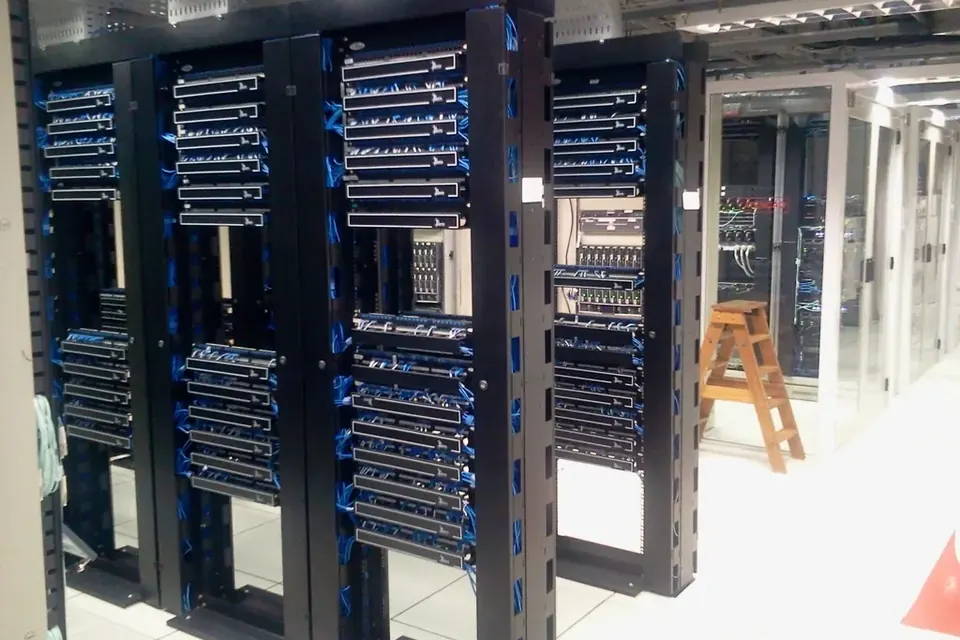
In the hills north-west of Amman, a ring of magnets keeps electrons circulating close to the speed of light so that researchers from across the region can study materials, cells, soils and ancient artefacts with intense X-ray and infrared light. SESAME, the Synchrotron-light for Experimental Science and Applications in the Middle East, is a working research facility. It is also one of the clearest examples of what the 2030 Agenda means by partnership: governments that rarely sit at the same table share its council, its budget and its beam time.
What a synchrotron light source does
A synchrotron light source accelerates electrons and then stores them in a ring, where magnets bend their path. Each time a fast electron changes direction it gives off electromagnetic radiation, from infrared to hard X-rays, in a narrow and extremely bright beam. That light is channelled tangentially out of the ring into beamlines: experimental stations, each optimised for one family of techniques, where a sample is placed in the beam and detectors record what happens.
The value of the light lies in its brightness and tunability. Scientists can choose the wavelength that probes the chemical element or the structure they care about, and they can do it fast and non-destructively. That makes synchrotrons general-purpose tools rather than single-discipline instruments. Archaeologists, soil scientists, structural biologists, engineers working on batteries or catalysts, and medical researchers all queue for the same machine.
Before SESAME, researchers in the Middle East who needed such light had to win time at facilities in Europe, North America or Asia, travel there, and compete with local users. A regional light source changes the cost and the frequency of access, which in turn changes what kind of research and training becomes possible at home.
From a UNESCO decision to an autonomous laboratory
The project took shape under UNESCO's auspices. According to SESAME's own description, UNESCO's Executive Board approved its development at its 164th session, in May 2002. The organisation then became an autonomous intergovernmental body whose members have full control over its development, operation and finances. That detail matters: SESAME is not a UNESCO programme or a project run by a donor. It belongs to the governments that pay for it.
Its current members are Cyprus, Egypt, Iran, Israel, Jordan, Pakistan, Palestine and Türkiye. Some twenty observers, among them several European and Asian countries, the United States, the European Union and CERN, follow its work, and international laboratories, CERN in particular, have provided equipment and expertise. Jordan hosts the facility at Allan, in the Balqa governorate.
The machine itself had an unusual start. Germany donated major components of BESSY I, a Berlin synchrotron that was being replaced, and they were reused in SESAME's injector system. The main storage ring was built new, with its magnets designed and assembled through a collaboration involving CERN and funded in part by the European Union. SESAME was officially opened on 16 May 2017.
The machine and its beamlines
SESAME describes itself as a third-generation light source, the first of its kind in the Middle East and neighbouring countries. Its storage ring operates at 2.5 GeV and is 133 metres in circumference, according to the laboratory. Those figures put it in the class of medium-sized national light sources, a sensible scale for a facility that has to serve a broad regional community rather than push the frontier of brightness.
The beamlines were added one at a time, as money and partners allowed. The laboratory lists the following:
- XAFS/XRF: X-ray absorption and fluorescence spectroscopy, used to identify which elements a sample contains and in what chemical state. Typical uses include pollutants in soils and water, catalysts, and pigments in cultural heritage objects.
- IR: infrared microscopy and spectroscopy, which maps molecular composition. It is widely used for biological tissue, pharmaceuticals and polymers.
- MS/XPD: materials science and X-ray powder diffraction, for determining crystal structures and following how materials change under heat or pressure.
- BEATS: X-ray imaging and tomography, producing three-dimensional images of the inside of objects, from fossils and archaeological finds to engineering components.
- HESEB: a soft X-ray beamline developed with German Helmholtz research centres, suited to surface science and the electronic structure of materials.
- TXPES: a sister beamline of HESEB, sharing its light source, built around X-ray photoelectron spectroscopy for the chemical analysis of surfaces. SESAME presents it as its first beamline fully designed, manufactured and installed by one member country, Türkiye.
This range matters for development goals. Soil and water chemistry feeds into food security; materials research into energy storage and cleaner industry; imaging into heritage conservation and medicine. None of these questions is specific to physics, which is precisely why a shared light source is considered infrastructure rather than a specialist instrument.
How scientists get access
Like most light sources, SESAME is a user facility. Its own staff run the accelerator and support the beamlines; most experiments are carried out by visiting teams. SESAME explains that scientists, including graduate students, typically come for a week or two, two or three times a year. Beam time is requested through proposals submitted to the laboratory's user office, and the details of calls and evaluation are published on its user pages.
The model has a training effect that outlasts any single experiment. A doctoral student who prepares a proposal, travels with samples, runs measurements around the clock with a team and then processes the data acquires skills that are transferable across sciences. Over time a community of users forms in the member countries, and that community is what justifies the facility to the governments that fund it. The challenge, familiar from other shared infrastructures such as the Square Kilometre Array, is to make sure that access does not concentrate in the few institutions that were already strong.
Powered by the sun
Accelerators use a great deal of electricity, and for a laboratory whose members pay its operating budget, energy prices are a direct threat to beam time. SESAME's answer was a solar power plant, inaugurated on 26 February 2019. The laboratory states that this made it the world's first large accelerator complex fully powered by renewable energy, and the first carbon-neutral accelerator laboratory. As with most renewable supply, "fully powered" is best read as the plant's output covering the laboratory's consumption over time, with the grid absorbing the difference between sunny hours and night-time operation.
For other countries considering research infrastructure, the episode is instructive. Operating costs, more than construction, decide whether a facility runs at full capacity for decades. Planning for energy from the start is part of making an investment sustainable, in both senses of the word.
Science diplomacy, with limits
SESAME is often described with the model of CERN in mind: a laboratory founded partly to rebuild scientific cooperation between countries that had recently been at war. The comparison is fair as far as it goes. Delegates from member states that do not have diplomatic relations with one another sit on the same council and agree on budgets and priorities, and scientists from those countries work at the same beamlines.
It is worth being careful about what this proves. A shared laboratory does not resolve political conflicts, and SESAME's history includes long delays caused by funding gaps and regional instability. What it shows is narrower and still valuable: that practical cooperation on a well-defined technical project can be sustained across political divides, and that it creates a group of professionals with working relationships that would otherwise not exist.
What SESAME says about SDG 17
Goal 17 asks for stronger cooperation on, and access to, science, technology and innovation, and for knowledge sharing on mutually agreed terms. SESAME gives these aims a concrete shape:
- Shared ownership rather than access granted by a distant partner. The members decide and pay.
- Mixed contributions: cash from members, donated equipment, in-kind expertise from international laboratories and funding from the European Union, a pattern also described in our explainer on how the EU and the UN work together on the SDGs.
- Capacity built in the region: engineers, technicians and researchers trained to operate and use a large facility, not just to visit one.
The next questions are the ones every research infrastructure faces: keeping operating budgets stable, adding beamlines as user demand grows, and making the data produced as reusable as possible, in line with the principles discussed in our article on open science and the UNESCO Recommendation. How SESAME answers them will say a good deal about whether regional infrastructure can become a normal part of science in the Global South.
 Research infrastructures
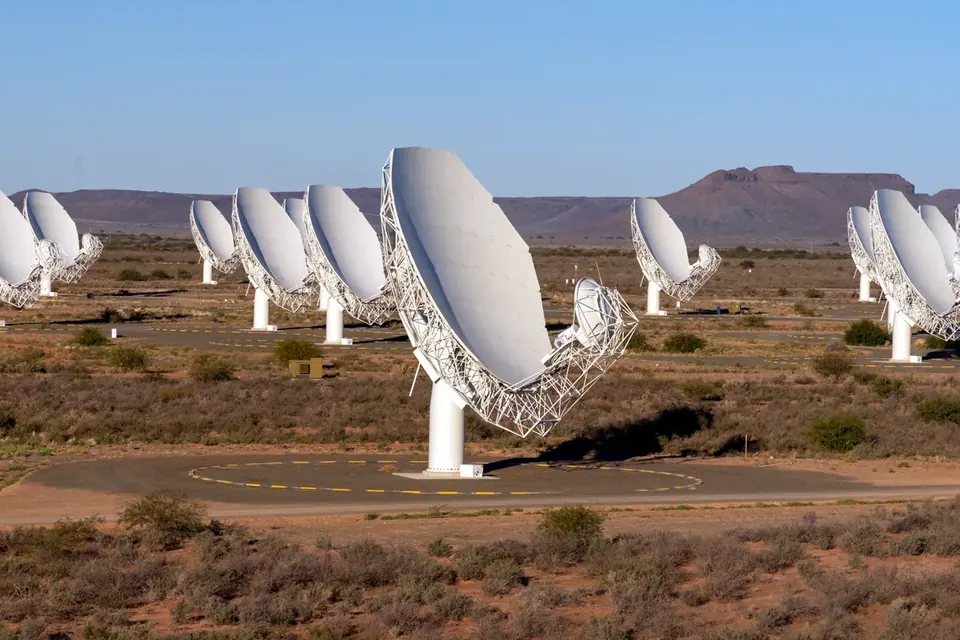
The Square Kilometre Array
Two radio telescope arrays on two continents, one treaty organisation, and a data challenge that reshapes shared computing.
Cooperation and skillsOpen science and the SDGs
The 2021 UNESCO Recommendation, its seven areas of action, FAIR and CARE data, and who pays for openness.
 Cooperation and skills
How the EU and the UN work together
The EU's status at the UN, Team Europe and Global Gateway, SDG reporting, research cooperation and the tensions worth knowing.