How the EU and the UN work together on the Sustainable Development Goals
The European Union is not a member of the United Nations, its 27 member states are. Yet the EU is one of the UN system's largest partners on sustainable development, and it has committed to implementing the 2030 Agenda both inside Europe and through its external policies. How that relationship works is less obvious than it looks.
The EU's status at the UN
The European Community obtained observer status at the UN General Assembly in 1974. In 2011, General Assembly resolution 65/276 upgraded the EU's participation, allowing its representatives to speak among major groups, present proposals and amendments agreed by its member states, and circulate documents, without a right to vote. In practice the EU coordinates positions among its members on many issues, and its delegations in New York and Geneva speak on their behalf where they have agreed a common line.
The EU also participates in many UN bodies and conferences, and it is a party in its own right to a number of UN conventions, including the UN Framework Convention on Climate Change and the Convention on the Rights of Persons with Disabilities.
The policy framework
| Instrument | What it does |
|---|---|
| New European Consensus on Development (2017) | A joint statement by the EU institutions and member states aligning EU development policy with the 2030 Agenda, organised around people, planet, prosperity, peace and partnership |
| NDICI-Global Europe (Regulation (EU) 2021/947) | The EU's main external funding instrument for 2021-2027, merging several previous instruments |
| Team Europe | An approach launched in 2020 in which the EU, member states, and their development finance institutions pool efforts behind joint initiatives in partner countries |
| Global Gateway (2021) | A strategy for investment in infrastructure, digital, energy, transport, health and education in partner countries, aiming to mobilise up to €300 billion between 2021 and 2027 from public and private sources |
Together, the EU and its member states are consistently reported among the largest providers of official development assistance in the world. Annual figures are published by the OECD Development Assistance Committee.
Where the EU and UN agencies work together
A large share of EU external funding is implemented through UN agencies, funds and programmes, particularly in fragile contexts where the UN has field presence and the EU does not. Typical areas include:
- Humanitarian aid, with agencies such as WFP, UNHCR and UNICEF.
- Health, including support to WHO and to global health initiatives on vaccines and pandemic preparedness.
- Governance and rule of law, often with UNDP.
- Gender equality, for example through the EU-UN Spotlight Initiative on ending violence against women and girls, launched in 2017.
- Statistics and data, including support to national statistical offices for SDG indicators.
The two sides have a strategic partnership that also covers peace operations and crisis management, with jointly agreed priorities renewed every few years.
Reporting on the SDGs
Each year at the UN High-level Political Forum (HLPF), countries can present a Voluntary National Review of their SDG progress. In July 2023, the EU presented its first EU Voluntary Review, covering both internal and external action. Separately, Eurostat publishes an annual monitoring report, Sustainable development in the European Union, based on an EU-specific set of SDG indicators. Eurostat also publishes the housing cost overburden rate, from the EU statistics on income and living conditions, used in the explainer on affordable housing and fair rents.
Science and research cooperation
Research is a less visible but important channel. Horizon Europe, the EU's research and innovation programme for 2021-2027, is open to participants from around the world, and several non-EU countries are associated to it. EU-funded research feeds into UN assessments such as those of the Intergovernmental Panel on Climate Change (IPCC) and IPBES on biodiversity. Large research infrastructures, such as those discussed in the explainers on LifeWatch ERIC and the Square Kilometre Array, are built by coalitions of states that overlap with these partnerships.
SDG target 17.6 calls for enhanced North-South, South-South and triangular cooperation on science, technology and innovation. The UN's Technology Facilitation Mechanism, created by the 2030 Agenda, holds an annual multi-stakeholder forum on the topic.
The security-development nexus
In regions affected by conflict, such as the Sahel, development and security are hard to separate: insecurity blocks schools, clinics and markets, while poverty and exclusion feed conflict. The EU and the UN have both deployed missions and programmes in the region. The UN peacekeeping mission in Mali (MINUSMA) ended in 2023 at the request of Mali's transitional authorities, and several EU missions in the region have been scaled back or ended. These changes illustrate that partnership depends on the consent of host governments, and that the "nexus" approach linking humanitarian, development and peace work is difficult to sustain when political conditions shift.
Tensions worth knowing about
- Policy coherence. The 2030 Agenda (target 17.14) asks countries to make policies coherent. Critics point to areas where EU trade, agricultural or migration policies may work against development goals elsewhere.
- Earmarking. Much EU funding to UN agencies is earmarked for specific projects rather than core budgets, which supports accountability but can fragment UN work.
- Visibility. The EU wants its contributions recognised; the UN emphasises multilateral neutrality. Agreements on visibility are a recurring practical issue.
Related explainers: digital skills for the SDGs and agri-food research.
 Cooperation and skills
Research and innovation in agri-food systems
Why food systems research is central to SDG 2, how international agricultural research is organised, and the trade-offs it raises.
 Research infrastructures
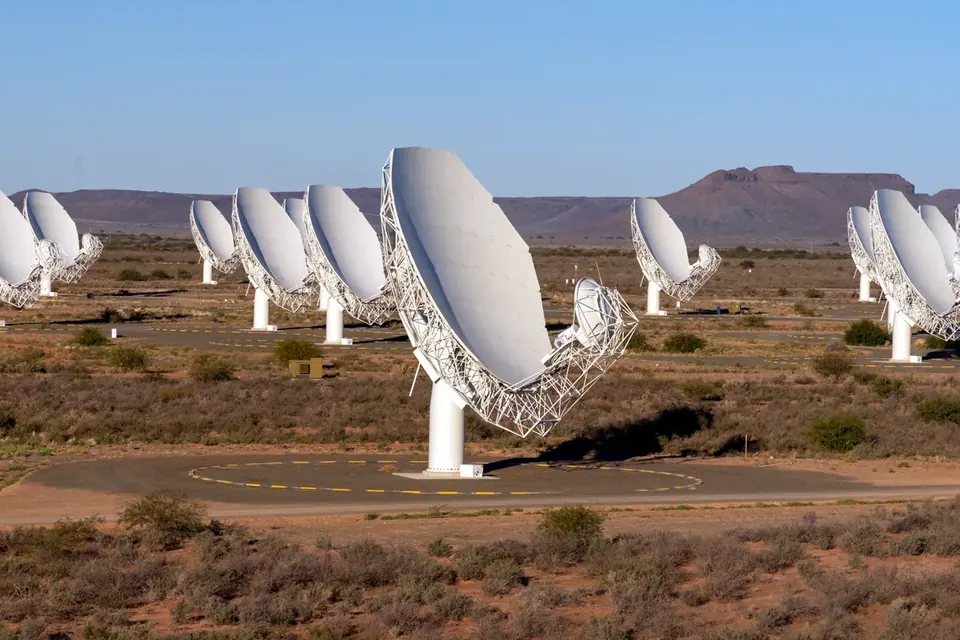
The Square Kilometre Array
Two radio telescope arrays on two continents, one treaty organisation, and a data challenge that reshapes shared computing.
 Cooperation and skills
Digital and high-tech skills for the SDGs
What indicator 4.4.1 measures, the connectivity gap, frameworks such as DigComp, and what tends to work in building skills.